


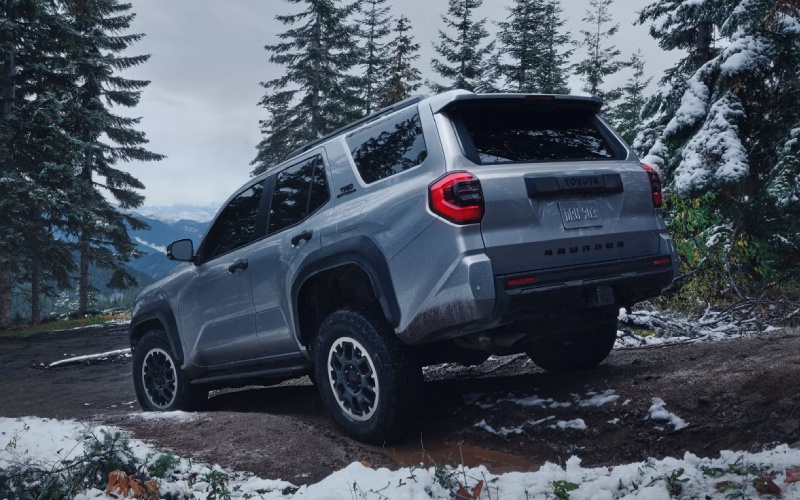
City Toyota – Which SUV is more comfortable for daily driving and weekend trails near Helena, MT — the 2026 Toyota 4Runner or the 2026 Jeep Wrangler?
Short answer first
If your top priority is a smoother, quieter commute paired with confident, low-stress capability on rutted forest roads, the 2026 Toyota 4Runner takes the lead. Wrangler remains the icon of open-air freedom and technical trail work, but 4Runner’s TNGA-F chassis tuning, available i-FORCE MAX Hybrid torque, and everyday-friendly features—like the available hands-free power liftgate and power rear window—make it a calmer, easier companion Monday through Sunday.
For shoppers weighing daily refinement against off-road bona fides, it helps to compare where you actually spend time: multi-lane highways, in-town errands, gravel connectors to the campsite, and only occasionally the kind of slow, technical rock steps where lockers and deep crawl ratios shine. That’s the use case where 4Runner’s suspension tuning and power delivery quietly carry the day.
Ride and noise: where you live most of the time
On the road, 4Runner’s frame rigidity and shock tuning pay off with reduced head toss over expansion joints and fewer aftershocks on patched pavement. Wrangler’s solid axles and knobby tire options are terrific on the trail, but they can transmit a bit more chatter and ambient road sound into the cabin. The 4Runner’s available FOX® or Bilstein® shocks with remote reservoirs prioritize control without beating you up, so long slogs to trailheads are less taxing on the driver and passengers.
Cabin isolation also matters. The 4Runner’s structure and door sealing help it stay calm at speed, with an available 14-in. Toyota Audio Multimedia touchscreen is placed high and easy to glance at without straining. Wrangler’s latest cabins have improved greatly, yet most shoppers still notice the 4Runner’s quieter demeanor over a week of commuting and errands.
Power delivery: torque when and where you need it
The 4Runner’s i-FORCE 2.4L turbo is tuned for strong midrange response—ideal for passing after a slowdown behind a semi or merging onto a busy highway. Upgrade to the available i-FORCE MAX Hybrid and you unlock up to 326 net combined horsepower and 465 lb.-ft. of torque, which makes towing and crawling feel surprisingly effortless. Wrangler offers a 3.6L Pentastar® V6 (285 hp/260 lb.-ft.) and a 2.0L turbo (270 hp/295 lb.-ft.), both proven and willing, but neither matches the 4Runner hybrid’s deep low-end pull or the relaxed way it handles heavy loads and steep grades.
Put simply, the 4Runner’s torque arrives early and smoothly, which keeps you in better control on loose-surface climbs and when you want to flick past a slower line of traffic without revving to the heavens.
Everyday usability: where 4Runner quietly wins
Practical touches add up. The 4Runner’s available hands-free power liftgate opens wide, and its signature power rear window lets you drop the glass to grab a backpack, a fly rod case, or the dog’s leash without re-stacking cargo. Available third-row seating means you can take a couple of friends to dinner, then fold everything down for a Costco run or a weekend’s worth of camping totes. Wrangler’s swing-out cargo door works, and its removable top and doors are unmatched for open-air adventures, yet day-to-day, 4Runner’s hatch-and-glass combination is simply easier to live with.
Technology is also a differentiator. The 4Runner offers an available 14-in. display—bigger than Wrangler’s 12.3-in. screen—with wireless Apple CarPlay® and Android Auto™. Off-road, the available Multi-Terrain Monitor (MTM) beams selectable front, side, or rear views to that display so you can thread rocks, roots, and parking curbs with confidence. Wrangler counters with a forward-facing camera on certain trims; it’s helpful, but not as comprehensive as 4Runner’s multi-view setup.
4×4 systems and trail tech: capability without the drama
Both SUVs come ready to get dusty. 4Runner offers part-time 4WD and an available Full-Time 4WD system that’s perfect for fickle shoulder seasons when pavement alternates with wet clay or gravel. Multi-Terrain Select with Crawl Control takes the edge off technical driving by precisely managing throttle and brakes. An available Stabilizer Disconnect Mechanism (SDM) gives the front axle more articulation for lopsided obstacles. Wrangler brings Command-Trac® and available Rock-Trac® 4×4 systems, plus an electronic sway bar disconnect on Rubicon models—serious hardware that excels in slow, technical terrain.
The distinction is in how each system fits mixed-use life. 4Runner’s Full-Time 4WD and driver-selectable modes make it easy to just drive—no second-guessing surface changes—while the suspension remains composed when you’re hustling to make a dinner reservation after a dusty detour.
Safety tech matters, too. Every 4Runner includes Toyota Safety Sense™ 3.0 for modern driver assistance across the lineup. Wrangler adds useful technology on certain trims, but the consistency of standard TSS 3.0 gives 4Runner an ownership confidence edge for many families.
FAQ-style pointers as you narrow your choice
- Daily comfort priority: 4Runner’s calm ride, available 14-in. screen, and quieter cabin make commutes feel easier.
- Open-air adventures: Wrangler’s removable doors and tops deliver the most wind-in-your-hair experience—nothing else is quite like it.
- Family flexibility: 4Runner’s available third row and power rear window simplify real-life seating and cargo juggling.
- Low-speed control: Both offer traction tools; 4Runner’s Crawl Control and available SDM add confidence without constant pedal finesse.
- All-weather readiness: 4Runner’s available Full-Time 4WD is a set-it-and-forget-it option for mixed-surface days.
In short, if you split miles between pavement and unpaved detours and want the vehicle that feels calmer more of the time, the 4Runner earns the nod. Wrangler remains a legend for open-air fun and highly technical trails; it just demands a few more compromises in everyday comfort.
Still deciding? City Toyota—serving Helena, Lewistown, and Fort Benton—can walk you through feature differences on the lot, explain how 4Runner’s grades map to your needs, and set up back-to-back drives that fairly showcase both SUVs’ strengths in the scenarios you actually face all week long. One test loop is usually all it takes to feel the day-to-day difference.
Frequently Asked Questions:
Does the 4Runner ride more smoothly than the Wrangler on patched pavement?
Generally, yes. The 4Runner’s TNGA-F chassis, shock tuning, and cabin isolation keep it calm over broken surfaces, while the Wrangler’s solid axles and aggressive tire options may transmit more road texture into the cabin.
Which SUV feels easier to place on narrow forest roads?
Both are manageable, but the 4Runner’s available Multi-Terrain Monitor (front, side, and rear views) and stable on-center steering feel help reduce the guesswork when shoulders are soft and sightlines are short.
If I want capability with less fuss, which 4WD setup should I look for?
Consider the 4Runner’s available Full-Time 4WD system for mixed-surface driving. It actively manages traction without driver intervention, so you can focus on the route rather than toggling modes.
Request more 2026 Toyota 4Runner information
Connect with us


