


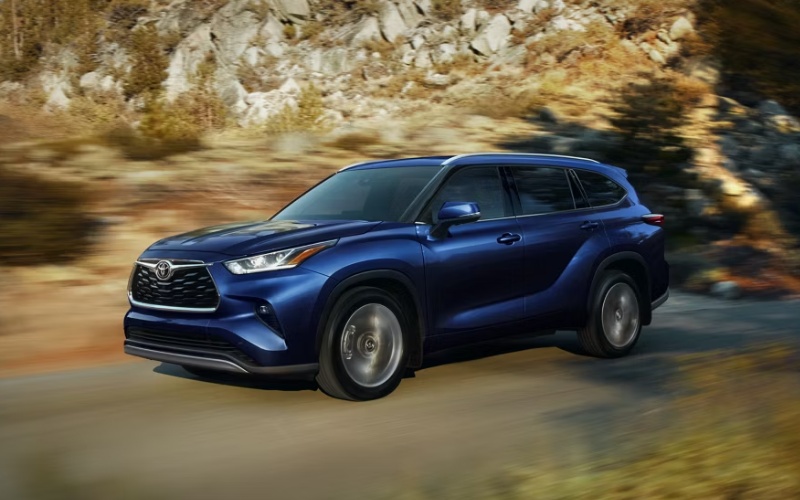
City Toyota – Which three-row SUV gives better winter-road confidence around Kalispell, MT — the 2026 Toyota Highlander or 2026 Hyundai Palisade?
Montana families ask a practical question each fall—when the roads get slick, which three-row SUV inspires more confidence, the Toyota Highlander or the Hyundai Palisade? Both pair all-wheel-drive availability with smart traction programming, but they take different approaches to keeping you in control around Kalispell, MT’s changeable conditions. Toyota’s available Dynamic Torque Vectoring AWD can route engine power not only front to rear but also side to side across the rear axle, helping the vehicle rotate naturally through a turn on packed snow without feeling nervous. Palisade’s HTRAC® AWD offers Snow, Mud, and Sand modes and an available electronic limited-slip differential on adventure trims, enhancing traction when it’s loose or uneven. The difference often shows up mid-corner, where Toyota’s wheel-by-wheel torque distribution gives finer control and greater composure.
Power delivery matters too. The Highlander’s turbocharged torque arrives early and predictably, helping you ease away from a slick stop sign with delicate inputs. Palisade’s new V6 and hybrid options target strong output, while Tow Mode and terrain settings broaden capability. Both SUVs add hill-hold logic and stability programming that mean well on steep residential streets. Yet the Highlander’s Multi-Terrain Select goes a step further with a Rock & Dirt mode, a handy tool when a plowed shoulder gives way to rutted surfaces on the way to the trailhead. Inside, you’ll find each model equipped for family duty—available panoramic moonroofs, wireless Apple CarPlay® and Android Auto™, and large digital displays to keep navigation and safety information in view. City Toyota helps shoppers understand how these systems feel on real roads and select the configuration that suits winter commuting and weekend drives alike.
- AWD logic: Toyota’s Dynamic Torque Vectoring AWD can shift torque between rear wheels for smoother, more confident cornering on snow; HTRAC® emphasizes predictable front-rear balance with selectable terrain modes.
- Traction modes: Highlander offers Snow and Rock & Dirt for mixed winter surfaces; Palisade provides Snow, Mud, and Sand with tow-friendly calibrations.
- Driver confidence: Head-Up Display and Panoramic View Monitor are available on Highlander to support visibility; Palisade offers a Surround View Monitor and a digital rearview mirror on select trims.
- Family tech: Both feature wireless Apple CarPlay® and Android Auto™ and large digital clusters to keep attention forward.
- Trailering support: Highlander gas models support up to 5,000 pounds when properly equipped, and Palisade ICE models target the same threshold with Tow Mode for gear-hauling weekends.
Shoppers also wonder about how safety tech behaves in real weather. Toyota Safety Sense™ 2.5+ arrives standard on Highlander, bringing Pre-Collision System with Pedestrian Detection, Lane Tracing Assist, and Full-Speed Range Dynamic Radar Cruise Control—features calibrated to work together across straightaways and bends. Hyundai SmartSense offers a wide suite of driver assists as well, including Forward Collision-Avoidance Assist and Lane Following Assist. Where Toyota shines is in the default tuning—alerts that feel timely rather than busy, lane centering that stays composed on worn markings, and dynamic cruise that eases into gaps without abrupt inputs. Add available Panoramic View Monitor for low-speed visibility, and the Highlander has a distinct advantage in winter parking lots and neighborhood traffic.
Ultimately, both SUVs can handle the season. The deciding factor is how each system communicates grip—and how that confidence scales with family needs over years of driving. If fine-grained control on packed snow and rutted shoulders matters to you, Highlander’s torque-vectoring approach gives it an edge. Our team, serving Lewistown, Fort Benton, and Kalispell, can walk through trim-by-trim differences and arrange a route that mirrors your daily drive, from neighborhood hills to open highway.
City Toyota is ready to help you compare configurations, from hybrid and gas powertrains to the specific AWD and visibility packages that matter most for winter peace of mind. Bring your questions, and we’ll tailor the information to your roads, your passengers, and your weekend plans—so your next three-row SUV feels right when the first snow flies.
Frequently Asked Questions:
Does torque vectoring really help on snow?
Yes. By sending more torque to the outside rear wheel as you turn, torque vectoring helps reduce understeer and keep your path tidy on packed snow, especially through long sweepers and decreasing-radius turns.
Are winter tires still necessary with AWD?
AWD helps you go; winter-rated tires help you stop and turn. For the best winter performance in Montana, combine AWD with quality winter tires on their own wheels.
Which visibility features matter most in winter?
Around-town parking and shoulder pull-offs benefit from an overhead-style camera view. Systems like Toyota’s Panoramic View Monitor or Hyundai’s Surround View Monitor help you see curbs, ice ruts, and snowbanks at low speed.
Request more 2026 Toyota Highlander information
Connect with us


