


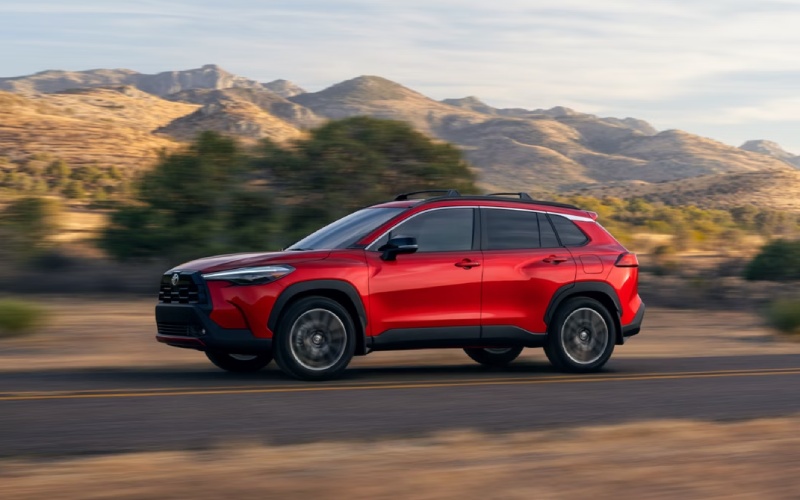
City Toyota – Which compact crossover delivers better winter traction for Helena, MT commutes — the 2026 Toyota Corolla Cross or the 2026 Honda HR-V?
What shoppers are really asking
When winter rolls across the upper Missouri, one question comes up often: which small crossover inspires more confidence as temperatures drop and roads get slick — the 2026 Toyota Corolla Cross or the 2026 Honda HR-V? This guide breaks down the traction technologies, key safety systems, and everyday features that matter most on cold-morning starts, slushy afternoons, and breezy evening commutes around Helena, MT.
Both vehicles are genuinely easy to live with. They park easily, seat five, and offer modern driver-assist suites. The distinction appears when the conversation turns to all-weather traction, power delivery, and available features that help maintain composure when the road surface and conditions change hour by hour.
AWD systems and how they behave in the real world
The Corolla Cross offers two distinct setups. Gas grades can be configured with AWD for added traction, while Hybrid grades employ Electronic On-Demand AWD that uses a dedicated rear electric motor. That e-motor can add rear-axle torque almost instantly — without clutches or driveshaft lag — so the vehicle launches confidently from a stop on snowy side streets and can subtly balance power front-to-rear mid-corner. In everyday terms, it feels calm, predictable, and quick to stabilize.
The HR-V’s available Real Time AWD™ with Intelligent Control System™ is a solid, proven approach. It uses sensors to engage the rear axle as traction needs rise, and it’s paired with Snow Mode to soften throttle tip-in and help reduce wheelspin. For many drivers, this setup is reassuring, especially if most miles are in town or on well-plowed routes. The difference, however, is the Corolla Cross Hybrid’s ability to deliver immediate, fine-grained rear-axle assistance with its electric motor — a trait that’s noticeable when pulling away from angled intersections or easing up an icy driveway.
Power delivery and composure
On cold days, power isn’t just about speed — it’s about control. The Corolla Cross Hybrid combines a 2.0-liter engine with electric motors for strong, consistent torque and smooth, quick responses. That helps keep the vehicle steady if a front wheel slips and the system needs a quick nudge of rear torque to maintain direction. The gas Corolla Cross uses a 2.0-liter engine tuned for predictable, linear acceleration, and its CVT emphasizes stability over abrupt shifts.
The HR-V’s 2.0-liter engine pairs with a CVT for steady progress and a relaxed feel at neighborhood speeds. It’s well-suited to calm commutes, though drivers who frequently climb rolling hills or navigate unplowed segments may prefer the added torque and traction logic the Corolla Cross Hybrid brings to the table.
Safety technology that helps in winter
Every Corolla Cross is equipped with Toyota Safety Sense™ 3.0, including Pre-Collision System with Pedestrian Detection, Lane Tracing Assist, Full-Speed Range Dynamic Radar Cruise Control, Automatic High Beams, Road Sign Assist, and Proactive Driving Assist (PDA). These features support confident spacing on multi-lane stretches, nudge steering to keep you centered as visibility shifts, and actively monitor the road ahead.
The HR-V includes Honda Sensing® on every trim, with Collision Mitigation Braking System™, Road Departure Mitigation, Adaptive Cruise Control with Low-Speed Follow, and Lane Keeping Assist. Sport and EX-L add a Blind Spot Information System with Cross Traffic Monitor. Both suites are excellent; Toyota’s inclusion of PDA and feature consistency across the Corolla Cross lineup give it an edge for drivers who want robust assistance no matter which trim they choose.
Ground clearance, braking, and visibility
Underbody clearance matters when ruts form or snow berms crowd the centerline. The Corolla Cross rides with confidence, and its available Front and Rear Parking Assist with Automatic Braking helps you ease into tight curbside spaces bordered by plow piles. Premium LED lighting and available heated mirrors support visibility on dark winter mornings and dusk commutes.
The HR-V counters with multi-link rear suspension across the lineup and available parking sensors on EX-L, adding Low-Speed Braking Control that can help at parking speeds. Its Snow Mode is handy for gentle takeoffs. The net difference? Both are capable, but the Toyota layers in more available active parking support and traction tools to build confidence when roads are narrow and the shoulder is glazed.
For drivers comparing features line by line, the Corolla Cross brings additional options that influence winter confidence: a factory-rated 1500-lb. towing capacity for a lightweight gear trailer, an available power liftgate that’s convenient with gloved hands, and an available JBL® Premium Audio system that keeps podcasts clear when wind noise rises. The HR-V’s tidy design and comfortable seats make it an easy cruiser, yet it forgoes a hybrid option and several convenience features that many Montana families value in shoulder seasons and winter months.
If your commute regularly includes uneven plow lines, compacted-snow intersections, or winds that sweep across open stretches, the Corolla Cross Hybrid’s Electronic On-Demand AWD feels especially composed. If most trips are short, predictable, and on well-maintained boulevards, the HR-V’s Snow Mode and Real Time AWD™ are reassuring standbys. The difference comes down to how quickly and seamlessly traction is apportioned and how much on-demand torque you have in reserve.
Still deciding? Consider a quick personal checklist based on your routine:
- Commute length and terrain: Are there hills, unplowed side streets, or frequent crosswinds?
- Traction priorities: Do you want instant rear-axle assist from an electric motor or a traditional AWD engagement?
- Convenience features: Will an available power liftgate, branded audio, or larger driver display improve day-to-day comfort?
- Utility needs: Do you plan to tow a small utility trailer or carry heavier hobby gear?
Frequently Asked Questions:
Does the Corolla Cross Hybrid’s AWD feel different from the HR-V’s Real Time AWD™ in snow?
Yes. The Corolla Cross Hybrid uses an independent rear electric motor to send torque instantly to the rear wheels, which can feel more immediate on slick takeoffs. The HR-V’s Real Time AWD™ engages the rear axle as sensors detect slip and pairs with Snow Mode for gentler throttle response.
Are advanced driver-assistance features standard on both?
Yes. Toyota Safety Sense™ 3.0 is standard on the Corolla Cross, and Honda Sensing® is standard on the HR-V. Toyota includes Proactive Driving Assist (PDA) across the lineup, while the HR-V adds Blind Spot Information System on Sport and EX-L.
Which one offers more winter-friendly convenience features?
The Corolla Cross offers an available power liftgate, a larger available 12.3-in. digital gauge cluster, and an available 10.5-in. multimedia display. These can make winter errands and longer drives more comfortable.
When you’re ready to test how these systems feel on real Montana pavement, schedule a back-to-back drive. City Toyota, serving Helena, Lewistown, and Fort Benton, can help you compare AWD engagement, steering feel, and visibility features on your own routes so the choice fits your daily rhythm.
Request more 2026 Toyota Corolla Cross information
Connect with us


