


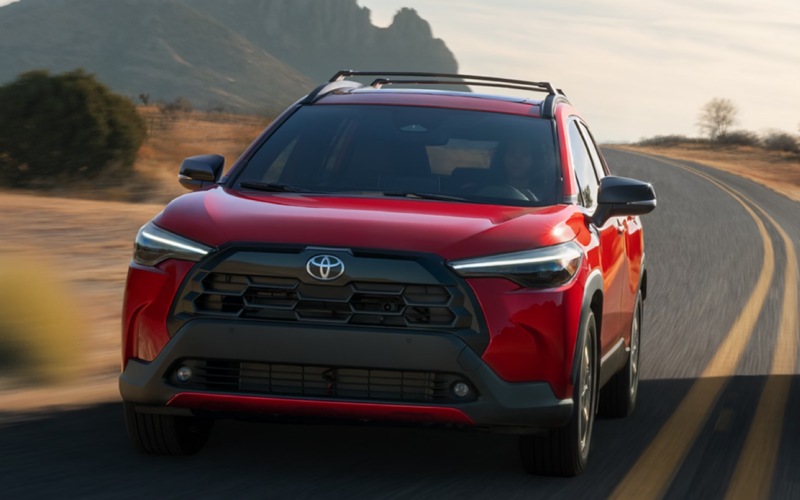
City Toyota – How Toyota Safety Sense 3.0 Builds Confidence on Everyday Drives around Helena, MT with the 2026 Toyota Corolla Cross
From early-morning commutes to after-school detours and weekend errands, daily driving around Helena, MT benefits from technology that quietly has your back. In the 2026 Toyota Corolla Cross, Toyota Safety Sense™ 3.0 arrives as standard, blending camera and radar support with software refinements that help the SUV feel alert yet natural on the road. The system’s mission is straightforward—enhance awareness, help reduce driver workload, and support collision avoidance when possible—without getting in your way. While you remain in control, the Corolla Cross can provide intuitive assistance that proves especially helpful amid changing light, busy intersections, and winter-weather surprises that Montana drivers know well.
Think of Toyota Safety Sense™ 3.0 as a suite of watchful co-pilots. Pre-Collision System with Pedestrian Detection (PCS w/PD) can alert you to potential frontal collisions and may automatically brake, while Full-Speed Range Dynamic Radar Cruise Control (DRCC) helps you maintain a set following distance, even down to a stop in traffic. Lane Departure Alert with Steering Assist (LDA w/SA) can provide gentle corrections if you begin to drift, and Lane Tracing Assist (LTA) works with DRCC to help keep you centered on the highway. Road Sign Assist (RSA) can recognize certain signs, displaying helpful reminders right on the screen, and Automatic High Beams (AHB) adjusts headlights as conditions change. The result is confidence that scales to your day—subtle when roads are clear, more active when conditions grow complicated.
- PCS w/PD: May issue alerts and apply braking to help mitigate or avoid certain frontal collisions with vehicles or pedestrians.
- DRCC: Helps maintain a preset distance to the vehicle ahead, working from highway speeds down to stop-and-go traffic.
- LDA w/SA: May alert and gently assist with steering inputs if you unintentionally drift from your lane.
- LTA: Works with DRCC to help you stay centered in your lane during highway cruising.
- RSA: Can recognize certain road signs and present them to the driver inside the vehicle.
Because real-world driving rarely follows a script, it helps that these features are designed to collaborate. For instance, when DRCC is set on I-15, LTA can assist in keeping the Corolla Cross centered through gradual curves or during temporary lane shifts near construction zones. At dusk, AHB can toggle your beams as you pass oncoming traffic. And in a congested parking lot, Toyota Safety Sense™ 3.0 pairs well with available Front and Rear Parking Assist with Automatic Braking (PA w/AB), giving you a broader confidence envelope in tight spaces. Together, these smart tools provide peace of mind that is easy to appreciate—and easier still to miss once you have driven with them.
Beyond Toyota Safety Sense™ 3.0, the Corolla Cross elevates daily convenience with available Blind Spot Monitor (BSM) with Rear Cross-Traffic Alert (RCTA), which is especially useful in crowded lots or when backing out near snowbanks that limit visibility. Inside, available 12.3-in. digital gauges and a 10.5-in. Toyota Audio Multimedia touchscreen with wireless Apple CarPlay® and Android Auto™ put important info and navigation where you need it, reducing the need to fumble with a phone. These elements complement Safety Sense by helping you remain focused and informed, from departure to arrival.
If you are mapping out which features matter most, consider your routines. Do you drive a lot at dawn or dusk? Do your errands pass through school zones and busy intersections? Do you split time between city streets and higher-speed stretches outside town? With those answers in hand, you can prioritize the features that will deliver the most day-to-day value. For many Helena families, Toyota Safety Sense™ 3.0 becomes less of a spec-sheet bullet and more of a quiet partner—always ready, rarely intrusive, and consistently helpful when the unexpected appears.
When you are ready to explore, a test drive can help you feel how these systems integrate while you remain in control of the SUV. City Toyota offers guided demonstrations so you can see how each feature operates in context and adjust settings to your preferences. For shoppers serving Helena, Lewistown, and Fort Benton, we can also walk you through available packages—from audio upgrades to convenience features—and help you choose a configuration that supports your daily driving with the right balance of assistance, comfort, and connectivity. The 2026 Toyota Corolla Cross turns advanced safety into practical confidence, mile after mile.
Frequently Asked Questions:
Does Toyota Safety Sense 3.0 work in heavy snowfall?
Driver-assist performance can be affected by severe weather or sensor blockage; always clear sensors and drive to conditions while the system supports you as designed.
Can I adjust alert sensitivity?
Yes. Many TSS 3.0 settings are customizable within the vehicle’s menus so drivers can tailor alerts and assistance levels.
Is DRCC helpful on two-lane highways?
It can help manage following distance, but always remain attentive to oncoming traffic, lane markings, and local passing rules.
Do I need special maintenance for these systems?
No special maintenance is required, but keeping sensors and the windshield clean helps ensure optimal performance.
Request more 2026 Toyota Corolla Cross information
Why the 2026 Toyota 4Runner Stabilizer Disconnect Mechanism Matters on Weekend Trails around Helena, MT
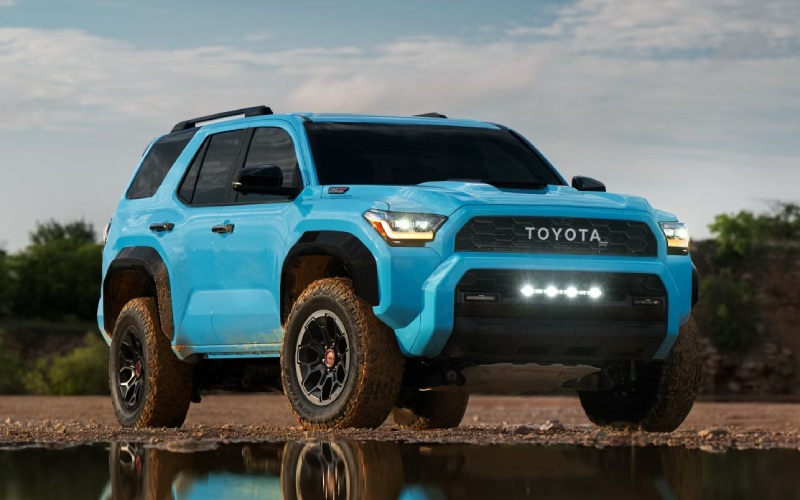
City Toyota – Why the 2026 Toyota 4Runner Stabilizer Disconnect Mechanism Matters on Weekend Trails around Helena, MT
Montana’s trail network invites exploration, and the 2026 4Runner brings a standout tool for those uneven, rutted, or rock-strewn sections that separate scenic routes from true adventures: the available Stabilizer Disconnect Mechanism. By increasing suspension articulation at low speeds, this feature helps the wheels maintain better contact with irregular terrain, improving traction and control where you need it most. When the path flattens or transitions to gravel, the system can restore a more road-focused stance, striking a practical balance between comfort and capability.
Think of the Stabilizer Disconnect Mechanism as a confidence booster for that surprise washout or off-camber rut, working alongside the 4Runner’s body-on-frame TNGA-F chassis, robust drivetrains, and available 33-in. all-terrain tire setups. It is also part of a broader ecosystem of driver aids and trail tools. On select grades, the available Multi-Terrain Monitor displays real-time underbody views on the available 14-in. Toyota Audio Multimedia touchscreen, which helps you place the tires precisely and avoid unseen obstacles. When towing a small trailer to the campsite, the available Tow Technology Package adds support features designed to make hook-ups and maneuvering easier. And after the trail, the available Onboard Air Compressor can help restore tire pressure so you are ready for the drive home.
- What it does: Increases suspension articulation to keep more tire contact on uneven surfaces for improved control.
- When to use it: Ideal at low speeds on ruts, rocks, or off-camber sections; disengage as conditions smooth out.
- How it helps: Reduces reliance on momentum for obstacle clearance, supporting steadier, more deliberate progress.
- Why it pairs well: Works in concert with available Multi-Terrain Select and Crawl Control on trail-focused grades.
- What to remember: Accessory setup matters—proper tires and well-secured gear complement chassis capability.
Layering tech can make a noticeable difference in how composed your 4Runner feels. For example, the available Multi-Terrain Select and Crawl Control systems on trail-tuned grades can help regulate wheelspin and maintain slow, steady progress across loose surfaces. Pair this with the Stabilizer Disconnect Mechanism’s added articulation, and you may find yourself picking cleaner lines at slower speeds with fewer scrapes and less wheel hop. That matters for comfort, component longevity, and driver focus—especially when a scenic spur trail presents an unexpected challenge.
Everyday practicality stays front and center, too. The signature power rear window makes quick work of accessing the cargo area when you need to grab recovery boards, a cooler, or a hiking pack without opening the liftgate. The tumble fold rear seats help you reconfigure space in a hurry, and available Pre-Wired AUX Switches make it seamless to integrate compatible Genuine Toyota Accessories like work lights, a compressor hose mount, or other gear that supports your trips. When road conditions change quickly—as they often do in the mountains—the available Toyota Safety Sense™ 3.0 suite of driver-assistance features adds reassurance on the highway home.
If you are comparing trail-focused setups, keep a checklist. Ask yourself which routes you plan to explore throughout the year, how often you might tackle technical sections, and whether you want the torque and responsiveness of the i-FORCE MAX Hybrid system for loaded climbs. Then consider which available packages and grade-specific hardware align with your priorities. Trail confidence is as much about predictable reactions and driver awareness as it is about raw numbers, and the 4Runner’s blend of chassis tuning and smart tech gives you both.
For shoppers mapping out their perfect configuration, City Toyota can walk you through how features work together on the trail and on the commute. We are serving Helena, Lewistown, and Fort Benton with guidance that connects the dots between capability, comfort, and the practical details that matter when your weekend plans stretch beyond the pavement.
Frequently Asked Questions:
Does the Stabilizer Disconnect Mechanism change ground clearance?
It does not change the vehicle’s stated ground clearance; it increases suspension articulation to help maintain tire contact over uneven terrain.
Will I still benefit if I stick to forest roads?
Yes. Even graded forest roads can develop ruts and off-camber patches where extra articulation improves control and comfort at low speeds.
How does it relate to Multi-Terrain Select and Crawl Control?
They complement each other—articulation helps keep tires in contact, while traction and speed management help you move forward steadily.
Can I tow with a trail-focused setup?
Yes. The 4Runner offers an available Tow Technology Package to help with trailer guidance and connection; verify the configuration that matches your needs.
What accessories make sense with this system?
Recovery boards, a compact air hose for the available Onboard Air Compressor, and compatible lighting via Pre-Wired AUX Switches are popular picks for weekend explorers.
Request more 2026 Toyota 4Runner information
How Toyota Safety Sense 4.0 Elevates Everyday Confidence in the 2026 Toyota RAV4 around Helena, MT
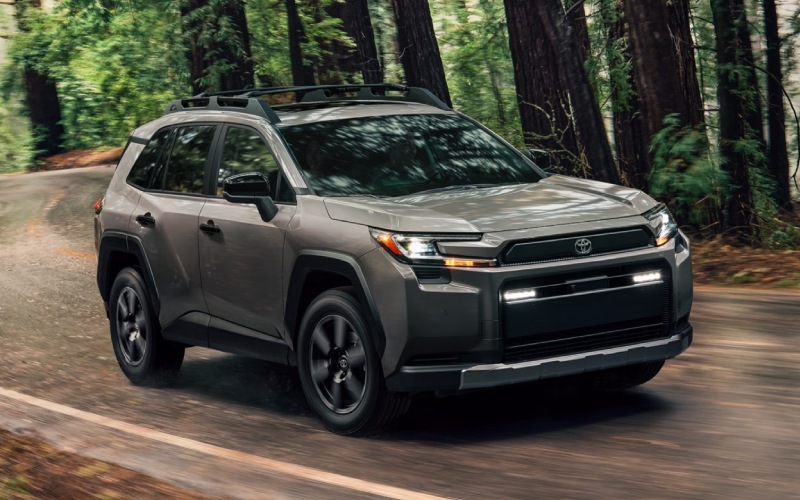
City Toyota – How Toyota Safety Sense 4.0 Elevates Everyday Confidence in the 2026 Toyota RAV4 around Helena, MT
Toyota Safety Sense™ 4.0 (TSS 4.0) in the 2026 RAV4 is more than a spec on a features list—it’s a suite of refinements designed to reduce stress in real driving situations, from downtown Helena crosswalks to the rolling curves near Canyon Ferry. With enhanced sensors and software tuning, TSS 4.0 brings smoother responses and more intuitive alerts, layering support that feels natural and unobtrusive. In a region where the weather can swing quickly, and daylight fades fast in winter, the RAV4’s standard safety suite sets you up with clear confidence before you even pull out of the driveway.
Drivers will also appreciate how TSS 4.0 pairs with the RAV4’s modern cabin tech. The standard 12.3-in. digital gauge cluster keeps crucial status front and center, while the available 12.9-in. Toyota Audio Multimedia touchscreen makes it easy to keep eyes forward with crisp visuals and responsive voice control. Available Drive Recorder adds another layer of built-in assurance by capturing events around the vehicle, and features such as available Traffic Jam Assist and available Advanced Park complement TSS 4.0 by taking the edge off stop-and-go or tight-parking moments. Together, they create an environment where you’re informed, supported, and better able to focus on the drive.
- Pre-collision awareness: TSS 4.0 enhances detection for vehicles, pedestrians, and cyclists in common scenarios, boosting confidence at busy intersections or trailhead parking areas.
- Lane-tracking support: Smoother lane centering feedback and lane departure assistance help reduce fatigue on extended I-15 and US-287 stretches.
- Adaptive distance control: Intuitive, adjustable following gaps and refined braking ease pressure in variable traffic flows without feeling abrupt.
- Low-speed reassurance: When paired with available Traffic Jam Assist on controlled-access highways, the RAV4 can help manage crawling congestion with composed inputs.
What stands out is how quietly capable these systems feel in day-to-day life. A gentle steering nudge here, a clear chime there—TSS 4.0 avoids distraction and helps you maintain situational awareness. This thoughtful tuning becomes invaluable when visibility drops or when a quick glance at a wildlife sign reminds you to be ready for the unexpected. Add the LED lighting suite, including standard dual beam projector headlights and available LED fog lights, and the RAV4 strikes a fine balance between active support and passive visibility that serves drivers well across Montana’s varied conditions.
For families, the peace of mind scales as passengers and cargo do. The system’s cooperative behavior means fewer abrupt corrections and a calmer cabin—something you’ll appreciate on after-school runs or weekend drives to Great Divide. And because the RAV4’s tech integrates seamlessly with everyday conveniences—wireless Apple CarPlay® and Android Auto™ compatibility, straightforward menus, thoughtful controls—you’re less likely to fumble with settings when you should be focused on the road.
When you’re ready to test these systems in person, one drive often tells the story: the RAV4’s standard TSS 4.0 provides a more composed, less fatiguing experience while still leaving you in command. This blend of capable hardware, smart software, and clear communication is exactly what many drivers want from modern safety—support that brings calm without getting in the way.
Frequently Asked Questions:
Is Toyota Safety Sense 4.0 standard on every 2026 RAV4?
Yes, TSS 4.0 is standard across the lineup, so you start with a strong foundation of driver assistance features from day one.
Does TSS 4.0 work in snow or heavy rain?
Systems are designed for real-world conditions, but visibility and sensor performance can be reduced by severe weather. Always drive to conditions and stay attentive.
How does Traffic Jam Assist differ from standard adaptive cruise?
When available and engaged on controlled-access highways, Traffic Jam Assist helps with low-speed control and steering support in dense traffic under specific conditions.
Can I turn off individual safety features?
Many settings are customizable. You can adjust sensitivity or toggle certain alerts through vehicle menus to suit your preferences.
City Toyota is proud to showcase how the 2026 RAV4’s standard safety, thoughtful lighting, and intuitive interfaces come together in a way that feels reassuring on familiar roads and adventurous routes alike—serving Helena, Lewistown, and Fort Benton with expert guidance on trims, features, and test-drive routes that highlight exactly what matters to you.
Request more 2026 Toyota RAV4 information
How the 2026 Toyota Tundra’s Multi-Link Rear Suspension Smooths Rough Roads around Fort Benton, MT
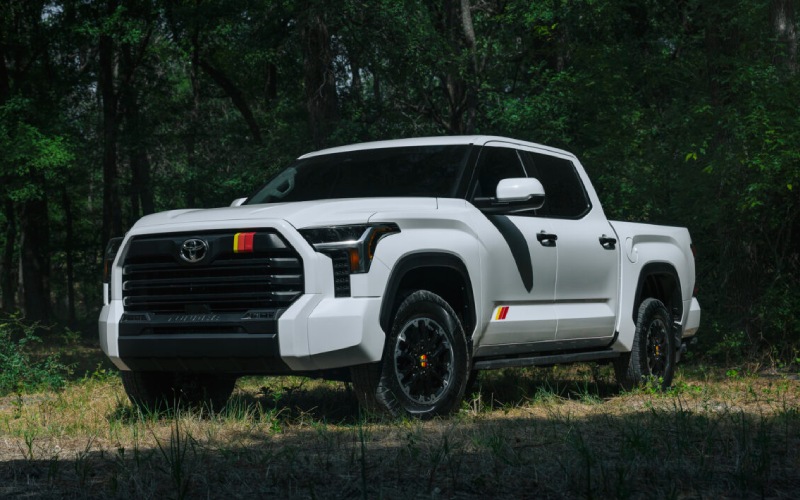
City Toyota – How the 2026 Toyota Tundra’s Multi-Link Rear Suspension Smooths Rough Roads around Fort Benton, MT
Gravel washboards, cattle-guard jolts, and frost-heaved pavement can make daily drives feel like a trail run. The 2026 Toyota Tundra addresses those Montana realities with a multi-link rear suspension that trades traditional leaf springs for coil springs and a carefully engineered linkage. The result is a different kind of truck composure—one that absorbs chatter, keeps the rear planted under load, and maintains confident tracking as speeds rise on open stretches. Whether you are hauling fencing supplies or towing a camper for a quiet weekend near the river, the Tundra’s suspension setup is designed to carry weight while staying calm and predictable.
The advantages start with better articulation and more consistent tire contact, which translates into a smoother ride across broken surfaces and improved stability when towing. Pair that with the available i-FORCE MAX hybrid system—delivering 437 hp and 583 lb.-ft. of torque—and the truck surges forward with authority, yet does not lose its composure as the rear suspension controls squat and rebound. Add in available technology like the Panoramic View Monitor for 360-degree awareness and Trailer Backup Guide with Straight Path Assist to make reversing with a trailer more intuitive, and you have a truck that reduces both physical and mental fatigue on long days. For drivers who balance weekday work and weekend exploration, that calm confidence is a real advantage.
- Ride comfort under load: Coil springs help manage squat and keep the rear stable when the bed is full or when tongue weight is substantial.
- Improved tracking: Multi-link geometry helps the Tundra stay planted on washboard gravel, reducing hop and drift.
- Predictable towing dynamics: Controlled rebound supports smoother trailer behavior and a steadier steering feel.
- All-surface versatility: From county roads to mountain switchbacks, the rear end maintains grip as conditions change.
Off-roaders benefit, too. When the trail gets rutted, articulation helps keep tires engaged, and the Tundra’s available TRD packages enhance that foundation with tuned shocks and all-terrain rubber. If your routine includes corrugated access roads to a trailhead or ranch gate, you will notice how the back end stays composed over repetitive bumps. That predictability builds trust—particularly when combined with driver-selectable modes that fine-tune power delivery for terrain or towing duties. Inside, the 12.3-in. digital gauge cluster can surface off-road and towing information, while the available 14-in. touchscreen gives you camera views and navigation on a single expansive display.
Drivers around Fort Benton who split time between open highways and gravel lanes often ask whether the Tundra’s suspension helps on long hauls with a family and gear. The answer is yes—because stability and comfort go together. By keeping the rear axle in check, the truck reduces fore-aft motion that can make passengers uneasy and helps maintain consistent control inputs from the driver. Combine that with advanced driver assistance through Toyota Safety Sense™ 2.5, and you get layered support when wind gusts, passing traffic, or surprise washouts test your poise.
For shoppers comparing setups, consider how you pack and pull. If you frequently carry awkward cargo, the aluminum-reinforced composite bed stands up to sliding loads while the multi-link suspension manages the weight shift. When towing, Trailer Backup Guide with Straight Path Assist simplifies alignment and backing maneuvers after a long day. And for those who want a bolder stance and even more trail readiness, TRD Off-Road and TRD Pro configurations sharpen the Tundra’s reflexes without losing that baseline stability that makes highway miles easy. When you are ready to evaluate cab and bed combinations, as well as accessory options that complement the suspension’s strengths, City Toyota offers guidance and build insights—serving Helena, Lewistown, and Fort Benton with product knowledge that speaks to real-world Montana driving.
Frequently Asked Questions:
Does the Tundra’s multi-link rear suspension reduce trailer sway?
It supports steadier towing by improving rear-axle control. While it is not a sway-control device, the design helps trailers track more consistently, and pairing it with a properly adjusted Integrated Trailer Brake Controller further enhances stability.
Will coil springs sag over time with heavy use?
Springs are engineered for durability within the truck’s rated capacities. Proper loading, regular maintenance, and observing tongue-weight guidelines help preserve ride height and performance over the long term.
Is the multi-link setup helpful off-road or mainly for comfort?
Both. It improves ride comfort on rough pavement and washboard roads and also enhances articulation and control off-road, especially when combined with TRD shock tuning and all-terrain tires.
How does this suspension work with the i-FORCE MAX hybrid powertrain?
The quick torque delivery of the hybrid pairs well with the suspension’s control, helping the truck launch smoothly with a trailer and remain settled as speeds rise or road surfaces change.
Request more 2026 Toyota Tundra information
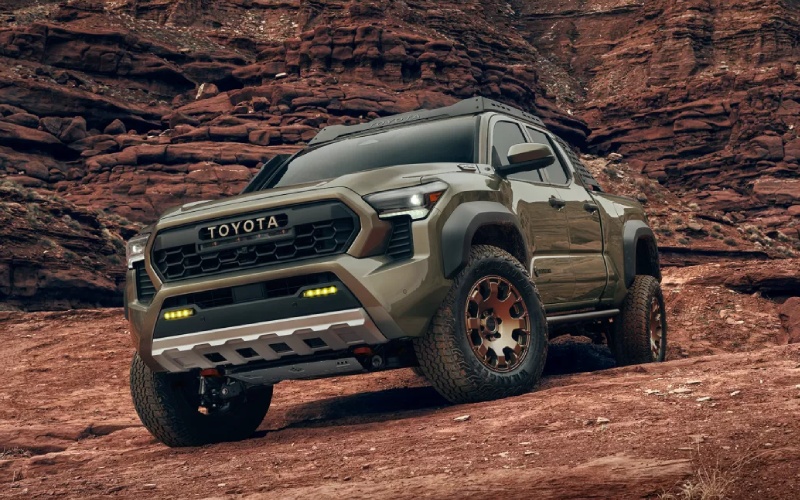
City Toyota – How is Towing Simplified with the Trailer Backup Guide with Straight Path Assist in the 2026 Toyota Tacoma around Lewistown, MT
If towing a camper, boat, or utility trailer makes you tense, Toyota had your back when it engineered the 2026 Tacoma’s available Trailer Backup Guide with Straight Path Assist. This smart system helps you reverse confidently by analyzing your steering inputs and trailer angle, then applying corrective steering to keep the trailer tracking straight. For drivers navigating tight approach lanes to storage buildings, angled driveways, or windy access roads near Lewistown, MT, the difference is immediate—less guesswork, less over-correction, and a shorter learning curve if you’re new to towing or switching between different trailer types.
Beyond the guiding overlays you see on screen, what sets Straight Path Assist apart is how it works seamlessly with Tacoma’s integrated trailer brake controller and available camera views. Once you’ve set up your trailer profile, you get a more complete picture of your environment plus steadier tracking as you back into position. If your towing life shifts with the seasons—snow machines in winter, side-by-sides in spring, drift boats after runoff—the toolset is adaptable and easy to reference from one trailer to the next. That means fewer “do-over” attempts at the ramp or campsite and more time dialing in your setup for the weekend ahead.
Let’s walk through how to make the most of Trailer Backup Guide with Straight Path Assist during your first few practice sessions. The key is to start slow, trust the guidance, and give the system the time it needs to interpret your inputs and the trailer’s arc. Many drivers report that within a couple of sessions, their confidence grows to the point that backing into a narrow approach or threading past obstacles feels methodical rather than stressful. By pairing the guidance with Tacoma’s steady steering ratios and available towing mirrors or camera views, your situational awareness increases—and your margin for error shrinks, in a good way.
- Set your trailer profile: Input trailer length and confirm connection, so the system can anticipate angle dynamics.
- Choose a practice zone: Find a wide, quiet area to rehearse straight-line backing and gentle angle corrections.
- Use light throttle: Steady, slow inputs give the system time to correct without abrupt swings.
- Watch your guides: Follow the on-screen overlays, and adjust your wheel gently to maintain alignment.
- Build to real-world gaps: Progress from wide spaces to campsite or driveway conditions with low-stress obstacles.
Once you’re comfortable with straight-line tracking, add Tacoma’s available Multi-Terrain Monitor to your toolkit. While MTM is designed for off-road views, switching between front, side, and rear perspectives provides helpful awareness in tight areas where curbs, posts, or uneven terrain can complicate trailer backing. Combined with the Blind Spot Monitor that can extend detection when a trailer is recognized, you have a tow-friendly cockpit designed to take stress out of both the highway haul and the final approach.
Frequently Asked Questions:
Do I need special trailer decals or markers for Straight Path Assist to work?
No additional decals are required. The system relies on your trailer profile and the truck’s sensors to calculate backing guidance.
Can the system handle different trailer lengths?
Yes. You can create or adjust trailer profiles so guidance reflects the length and behavior of the trailer you’re using that day.
What if I’m backing on gravel or uneven surfaces?
The system still helps maintain a straight path, but moderate speed and careful throttle are important for traction and accuracy on loose surfaces.
Does Straight Path Assist replace driver attention?
It’s an aid, not a substitute. Keep scanning mirrors and surroundings, and be ready to pause or correct as needed while the system assists.
For weekend anglers, snow riders, or DIYers, Tacoma’s towing tech lets you focus on your destination rather than dreading the last 30 feet of the trip. One mention deserves emphasis: Tacoma’s camera views, trailer-friendly driver assistance, and steady steering feel are engineered to work together, so if you’ve struggled with backing in the past, you’re not starting from scratch—you’re starting with a smarter foundation. City Toyota can demonstrate setup and best practices during a test drive, so you see how the system behaves with a trailer connected and understand how it fits your routine. We’re serving Helena, Lewistown, and Fort Benton with the kind of practical, hands-on guidance that turns features on a spec sheet into real confidence on the road and at the ramp.
Request more 2026 Toyota Tacoma information
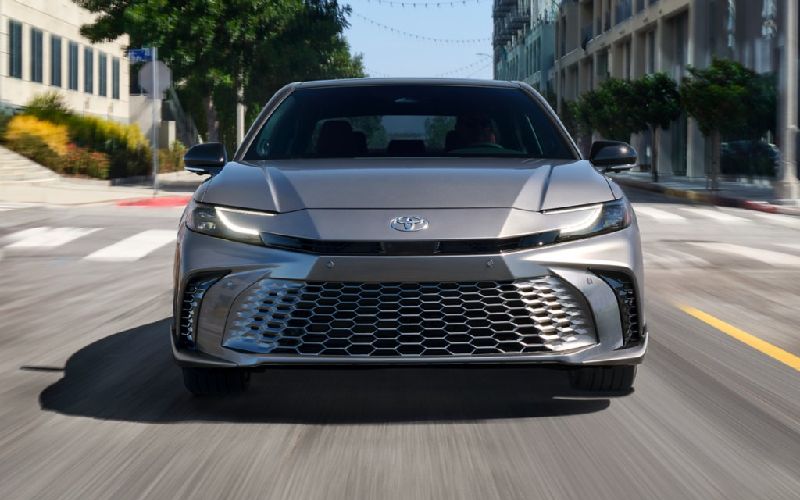
City Toyota – How Does Auto Loan Pre-Approval Work at City Toyota in Great Falls, MT?
Getting a new or pre-owned Toyota should feel exciting, not uncertain. At City Toyota in Great Falls, MT, our auto loan pre-approval helps you shop with clarity and confidence by outlining your financing options before you pick a vehicle. With a simple online credit application and guidance from our finance specialists, you can understand your estimated terms early, focus on the right models, and streamline your visit to our showroom at 3900 10th Ave So, Great Falls, MT 59405.
Pre-approval at City Toyota is a fast, secure way to gauge your purchasing power. It is not a final loan or a commitment to buy. Instead, it provides a clear snapshot of possible financing paths based on the information you share. Because there is no obligation to purchase once you are pre-approved, you can explore vehicles at your pace, compare trim levels, and plan next steps with fewer surprises on delivery day.
Here is how our process typically comes together for shoppers across Great Falls and nearby Montana communities.
- Start your application online using our secure credit form
- Enter essential details, including employment, income, and credit history information
- Receive a quick review from our team, often within minutes
- Connect with a City Toyota finance specialist for next steps and personalized guidance
- Shop our inventory with a clearer budget and a more efficient in-store experience
Choosing where to get pre-approved matters. Our approach is built around transparency and support from the moment you begin your application. City Toyota emphasizes Upfront Pricing and a Non-commissioned Sales Team, so conversations stay focused on fit and features. We also provide Real Cash Value for Trades to help you understand how your current vehicle can factor into your plan. Behind the scenes, our finance department works with competitive sources, including the manufacturer and local Montana banks, for quick approvals and financing programs designed to fit a range of needs.
Beyond the numbers, pre-approval can help you fine-tune your search across our new and pre-owned selection. If you want to explore value-added protection for long-term ownership, our team can outline available options such as extended warranty programs and other services that help protect your vehicle investment. Pre-approval naturally pairs with those conversations, giving you a more complete picture of monthly obligations and long-term planning.
Once you are pre-approved, it is easy to move forward with the fun parts of shopping in Great Falls. You can schedule a test drive, compare features, and look ahead to ownership with confidence. When you are ready to take delivery, our service center supports you with Toyota-trained technicians, Genuine Toyota parts, and convenient amenities. From ToyotaCare coverage on eligible new vehicles to Toyota Express Maintenance, our goal is to help keep your Toyota a Toyota throughout the miles ahead.
For many drivers, the biggest benefit of pre-approval is time saved. Because you share key details in advance, we can prepare tailored options before you arrive. That helps reduce back-and-forth at the store, keeps your visit focused on the vehicle itself, and makes it easier to drive home feeling great about your decision.
Frequently Asked Questions:
What credit score is needed for pre-approval at City Toyota?
You do not need a specific credit score to get pre-qualified. Our team considers several factors, including your credit history and income, to determine your pre-approval.
How long does the pre-approval process take?
Completing the online application typically takes minutes, and we will contact you once we have received and reviewed your information.
Can I get pre-approved if I have less-than-perfect credit?
Yes. We offer financing options for customers with all types of credit. Our finance specialists will work with you to find the best available financing option.
Is there an obligation to buy once I am pre-approved?
No. There is no obligation to purchase once you are pre-approved. It simply helps you make a more informed decision when choosing your next vehicle.
What information do I need to complete the online credit application?
Be ready to provide information related to employment, income, and credit history so we can review your application efficiently.
If you are ready to explore your options, start with our online credit application and let our finance specialists walk you through the next steps. Then visit our Toyota dealership in Great Falls, also serving Helena, Lewistown, and Fort Benton, to experience our selection, take a test drive, and see how our Upfront Pricing and Non-commissioned Sales Team make the process more straightforward. Have questions before you begin? Call us at 406-761-4900, and our team will be happy to help you get started.
Request more information
*Not actual model
City Toyota – Why the 2026 Toyota Corolla Cross Hybrid XSE Fits Life Around Helena, MT
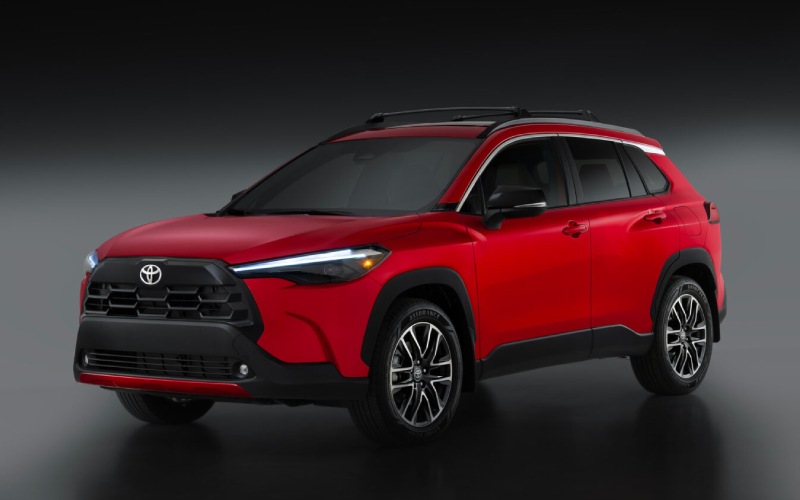
Life around Helena calls for a compact SUV that can pivot from packed weekdays to impromptu weekend drives—without skipping on comfort, confidence, or style. The 2026 Toyota Corolla Cross Hybrid XSE is built for that rhythm. Athletic proportions and 18-in. black-gloss alloy wheels signal purpose, while an available two-tone exterior with a black-painted roof adds a head-turning finish. Underneath, Electronic On-Demand All-Wheel Drive works with a composed multi-link rear suspension to keep the ride steady on rain-slicked pavement, gravel cut-throughs, and winding grades up to scenic overlooks. Step in and you will find a seamless interface—an available 12.3-in. digital gauge cluster and an available 10.5-in. Toyota Audio Multimedia display—the kind of layout that makes every task feel simple, from changing playlists to checking directions.
Comfort lands just as decisively. Available SofTex®-trimmed, heated front seats, dual-zone automatic climate control, four USB-C ports, and ambient lighting create a cabin that welcomes early starts and late returns. Toyota Safety Sense™ 3.0 comes standard with Pre-Collision System with Pedestrian Detection, Full-Speed Range Dynamic Radar Cruise Control, Lane Departure Alert with Steering Assist, Lane Tracing Assist, Road Sign Assist, Automatic High Beams, and Proactive Driving Assist to help keep you confident from Main Street to mountain roads. Flexible cargo space, 60/40 split-folding second-row seats, and 1500-lb. towing capacity support errands, skis, camping totes, and utility tasks. For drivers who want a compact SUV that wears its top-trim status lightly but backs it up all day, Hybrid XSE delivers.
- Design presence: Sporty, high-tech front fascia, 18-in. black-gloss wheels, and available two-tone body with black roof.
- Uplifted cabin: Available SofTex®-trimmed, heated front seats, ambient lighting, dual-zone climate control, and a leather-trimmed steering wheel.
- Clear information: Available 12.3-in. digital gauge cluster and an available 10.5-in. Toyota Audio Multimedia display.
- Confident control: Electronic On-Demand All-Wheel Drive and a composed multi-link rear suspension for stable responses.
- Smart connections: Wireless Apple CarPlay® and Android Auto™, plus Connected Services including Safety Connect®, Service Connect, and Wi-Fi Connect.
For shoppers weighing Hybrid XSE against other small SUVs, the details bring the value into focus. The lighting is premium—Bi-LED projector headlights with LED turn signals—while gloss-black heated outside mirrors with integrated indicators upgrade visibility and curb appeal. The cabin prioritizes utility as much as comfort, with a low liftover height, wide cargo opening, and helpful underfloor storage on select configurations. Add available JBL® Premium Audio for rich, clear sound, and the Hybrid XSE becomes as much a quiet retreat as a capable travel partner.
We know drivers want clarity as they compare trims. Below are quick answers to common questions to help narrow the focus before a test drive.
Frequently Asked Questions:
Does the Hybrid XSE include Toyota Safety Sense 3.0?
Yes, Toyota Safety Sense™ 3.0 is standard on every Corolla Cross, including Hybrid XSE, with features like PCS w/PD, DRCC, LDA w/SA, LTA, RSA, AHB, and PDA.
Is Electronic On-Demand All-Wheel Drive standard on the Hybrid XSE?
Hybrid grades feature Electronic On-Demand All-Wheel Drive, supporting surefooted traction in changing weather and on mixed surfaces.
Can I get a bigger multimedia screen in the Hybrid XSE?
Yes, Hybrid XSE offers an available 10.5-in. Toyota Audio Multimedia display, along with an available 12.3-in. digital gauge cluster for a cohesive, modern interface.
How flexible is the cargo area?
The 60/40 split-folding second row and a wide cargo opening make it easy to stow weekend gear, grocery runs, or a couple of roller bags with room to spare.
When you are ready to make the next move, plan a visit to City Toyota—serving Whitefish, Great Falls, and Helena—to see the Hybrid XSE up close. Walk around the sport-styled exterior, explore the multimedia options, and bring a short packing list to test the cargo layout. A quick loop will show how the hybrid system’s smooth response, polished interior, and thoughtful tech come together. If you want a compact SUV that looks sharp in your driveway and works hard every day, the 2026 Toyota Corolla Cross Hybrid XSE should be on your short list.
Request more 2026 Toyota Corolla Cross Hybrid information
*Not actual model
City Toyota – Why the 2026 Toyota Camry XSE Feels Perfect for Weekend Drives around Great Falls, MT
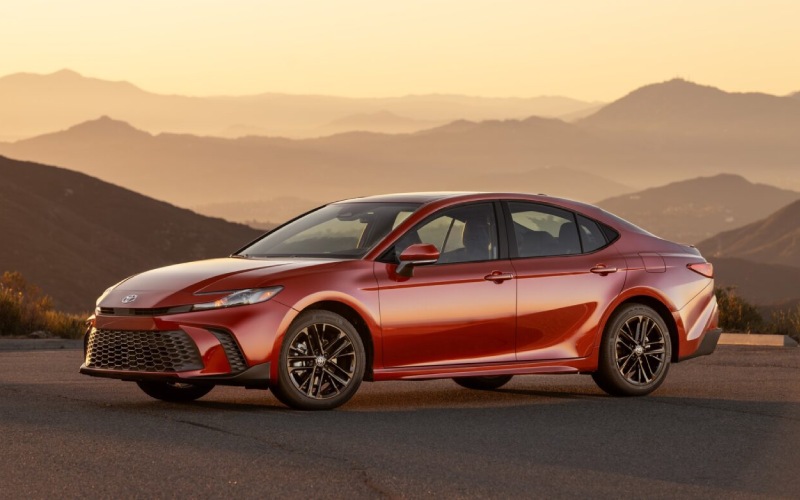
The 2026 Camry XSE blends the sport sedan feel you want for a spirited weekend with the all-hybrid composure that makes Monday traffic less of a chore. It rides on 19-in. smoked gray and black-finished alloy wheels and adds a sport-tuned suspension, so steering feels precise, and body motions are neatly controlled. Tap the 4-Mode Drive Switch into Sport when your favorite two-lane opens up, then slip back into Normal or Eco for the cruise home. Inside, the available 12.3-in. Digital Gauge Cluster and Head-Up Display bring key information into easy view, while the available JBL® Premium Audio system fills the cabin with balanced, detailed sound. Add Electronic On-Demand All-Wheel Drive for extra traction when the weather turns and more robust off-the-line response.
If your week swings from school drop-offs to client meetings and Saturday trailheads, XSE meets the moment. Toyota Safety Sense™ 3.0 and a standard Blind Spot Monitor support your awareness, while the hybrid system’s smooth torque makes quick work of merges and passes. The cockpit invites longer drives too—supportive seating, tasteful materials, and intuitive controls keep fatigue at bay. And because this Camry is part of Toyota’s broader electrified family, you get the peace of mind that comes from proven hybrid leadership paired with everyday practicality.
What stands out day to day is how easily XSE adapts. Morning commute in dense traffic? Settle into a calm rhythm with the hybrid’s quiet demeanor, and let available Traffic Jam Assist help reduce the tedious parts. Weekend errand loop? The trunk swallows gear, the cabin stays hushed, and the multimedia system makes it easy to cue up a podcast or playlist. Squeeze in a Sunday drive? Switch to Sport and get that livelier throttle feel that makes familiar roads enjoyable again.
For shoppers comparing trims, here are smart reasons to put XSE on your shortlist:
- Design with purpose: 19-in. wheels, a bolder stance, and a single exhaust with dual chrome-finished tips give XSE a confident look that matches its feel from behind the wheel.
- Driver-centric tech: Available 12.3-in. Digital Gauge Cluster and Head-Up Display keep vitals visible without pulling focus from the road.
- Road-ready confidence: Toyota Safety Sense™ 3.0 and a standard Blind Spot Monitor support awareness on busy highways and in tight parking lots.
- All-weather assurance: Available Electronic On-Demand All-Wheel Drive helps maximize traction when conditions change.
- Premium sound: The available JBL® Premium Audio system offers clear, punchy audio for commutes and road trips alike.
Frequently Asked Questions:
Is the Camry XSE’s sport-tuned suspension harsh on rough roads?
XSE aims for control without sacrificing comfort. The tuning delivers crisp response, but the ride remains composed on imperfect pavement, making it practical for daily driving.
Can I get the same tech in XSE that’s offered on other trims?
Yes. XSE is compatible with upgrades like the 12.3-in. Digital Gauge Cluster, Head-Up Display, and JBL® Premium Audio, so you can build a driver-focused cockpit with premium sound.
How does Electronic On-Demand All-Wheel Drive work?
When front wheels slip, the system can automatically send torque to the rear wheels to help optimize traction. It’s seamless and designed to inspire confidence on wet or snowy roads.
What makes XSE a better fit than SE if I like a sporty feel?
XSE adds a sport-tuned suspension, 19-in. smoked gray and black-finished wheels, and additional performance-oriented details that create a more athletic look and feel overall.
When you’re weighing which Camry fits your lifestyle, the XSE invites you to choose a version that looks the part and delivers on the promise. City Toyota is serving Bozeman, Whitefish, and Great Falls with a thoughtful, low-pressure approach—ready to help you tailor an XSE around your routine, your roads, and your weekend plans.
If you want one trim that threads the needle between daily comfort and genuine enthusiasm for the next drive, XSE is that sweet spot. It looks sharp, feels dialed-in, and supports your day with technology that’s useful rather than distracting. And with the hybrid system’s smooth response on tap, the most surprising part might be how effortless it all feels once the road opens up.
Visit when you’re ready to see—and feel—how the XSE balances premium touches with the right kind of performance character. Your next favorite drive could start with a simple test run and a few turns on familiar streets.
Request more 2026 Toyota Camry information
*Not actual model
City Toyota – How the 2026 Toyota 4Runner TRD Pro Brings Confident Trail Control around Bozeman, MT
The 2026 Toyota 4Runner TRD Pro is built for drivers who treat a dotted line on the map as an invitation. With FOX® 2.5-in. Internal Bypass QS3 shocks and rear piggyback-style remote reservoirs, 33-in. Toyo® all-terrain tires, and a Stabilizer Disconnect Mechanism designed to boost suspension articulation, TRD Pro stacks hardware that makes rough trails feel surprisingly smooth. It rides on the TNGA-F chassis—Toyota’s rugged body-on-frame architecture—so you get the strength and composure that matter when miles turn washboard or rocky.
Trail control is wrapped in clarity. The available Multi-Terrain Monitor projects selectable front, side, or rear camera views to the available 14-in. Toyota Audio Multimedia touchscreen, helping you spot ledges, ruts, and branch-strewn lines before you commit. Multi-Terrain Select and Crawl Control refine throttle and braking inputs, letting you focus on steering and tire placement. And when you air down for traction, the available onboard air compressor helps you reinflate before heading home. It is adventure-ready, with the power rear window for quick gear grabs and tumble fold rear seats that open serious cargo space for recovery kits, coolers, and camping shelters.
Daily driving isn’t an afterthought. Premium LED headlights illuminate pre-dawn starts, Toyota Safety Sense™ 3.0 bolsters confidence when traffic tightens, and connected tech—with wireless Apple CarPlay® and Android Auto™—keeps maps, music, and messages in sync. It’s the balance of trail toughness and weekday polish that gives this TRD badge real weight.
When you’re deciding if TRD Pro fits your life, think through a few core questions. Do you want factory-engineered suspension that’s designed for repeated hard use? Will added articulation help you clear the kind of rutted climbs or off-camber shelves you explore? Is clarity at the driver’s seat—through cameras and calibrated trail software—important on solo runs? If the answer is yes, TRD Pro delivers a chassis and a suite of systems that feel purpose-built rather than pieced together.
- FOX QS3 shocks: engineered damping with adjustability that keeps control on varied terrain
- 33-in. Toyo all-terrain tires: grip and sidewall support where sharp rocks and roots test rubber
- Stabilizer Disconnect Mechanism: added articulation to keep tires planted on uneven ground
- Multi-Terrain Monitor: real-time terrain views to refine your line choice before you crest or drop
Utility elevates the experience. The pre-wired AUX switches simplify integrating compatible lighting or other gear from Toyota’s accessory portfolio, and the ARB® accessory ecosystem pairs naturally with the 4Runner’s overlanding ethos. Whether you’re setting up a compact camp on forest service roads or pushing deeper for a multi-day trip, the platform scales with your ambitions.
Frequently Asked Questions:
Does TRD Pro still work as a daily driver?
Yes. The TNGA-F chassis and FOX® shocks provide control without punishing ride quality, while Toyota Safety Sense™ 3.0 and the available 14-in. Toyota Audio Multimedia keeps daily errands and commutes relaxed and connected.
Can I use the Stabilizer Disconnect Mechanism on every trail?
Use it when you need more articulation for uneven, technical sections. On smoother roads or at higher speeds, reconnecting the bar helps maintain crisp handling.
What kind of maintenance does the trail hardware require?
Follow Toyota’s recommended service schedule and visually check tires, shocks, and skid areas after tougher routes. Keeping the onboard air compressor and recovery gear ready is also a smart habit.
Will TRD Pro handle Montana winters?
Absolutely. With available 4WD, advanced driver assists, premium LED headlights, and all-terrain tires, TRD Pro delivers stability and traction in snow and cold conditions. Consider a dedicated winter tire set for maximum confidence.
If you want a factory-built trail machine that doesn’t compromise on daily refinement, the TRD Pro makes a compelling case. City Toyota is serving Fort Benton, Kalispell, and Bozeman with detailed walkarounds, trail-focused demos, and accessory guidance to dial in your build. Reach out when you’re ready to see how the 2026 4Runner’s peak off-road grade fits your weekend plans and weekday routine.
Request more 2026 Toyota 4Runner information
2026 Toyota Tundra Platinum i-FORCE MAX Towing Confidence and Everyday Comfort for Bozeman, MT Drivers
*Not actual model
City Toyota – 2026 Toyota Tundra Platinum i-FORCE MAX Towing Confidence and Everyday Comfort for Bozeman, MT Drivers
When your week includes worksite hauls and your weekend calls for mountain miles, the Tundra Platinum i-FORCE MAX blends power, composure, and comfort in a way that feels built for Montana. The hybrid system’s instant torque transforms towing into a smoother, more predictable experience, while Toyota’s multi-link rear suspension helps the truck stay planted on uneven routes and gravel approaches. Inside, the cabin balances premium materials with intuitive technology so your focus stays on the road and your gear.
This deep dive focuses on what makes Platinum i-FORCE MAX such a balanced choice if you want a truck that can pivot from heavy lifting to long-distance comfort. From its panoramic roof that brightens daily commutes to confidence-boosting trailering tech, this trim is a compelling fit for year-round driving in varied conditions.
Highlights that matter in real use:
- Hybrid powertrain advantage: i-FORCE MAX delivers assertive acceleration and robust torque for towing and mountain grades.
- Suspension tuning: The multi-link rear suspension enhances ride comfort and towing stability on rough roads.
- Big-screen clarity: 14-in. Toyota Audio Multimedia touchscreen centralizes navigation, audio, and towing functions.
- Driver information: Available 12.3-in. digital gauge cluster presents key data with crisp, configurable views.
- Visibility tools: Available Panoramic View Monitor (PVM) provides a 360-degree perspective around the truck.
- Trailer confidence: Available Trailer Backup Guide with Straight Path Assist helps you back up with precision.
- All-day comfort: Leather-trimmed 10-way power-adjustable front seats support you from jobsite to trailhead.
- Safety foundation: Toyota Safety Sense™ 2.5 adds driver-assistance tech to help support awareness and response.
How does Platinum i-FORCE MAX translate on the road? The hybrid system’s added torque at lower speeds makes short work of boat ramps, steep residential streets, and tight gaps in traffic. On a towing day, the available Trailer Backup Guide with Straight Path Assist reduces the juggling act when you need to align a trailer into a narrow drive. Add a Panoramic View Monitor (PVM) to help keep tabs on nearby obstacles in parking lots and trail staging areas. On a long interstate run, the leather-trimmed seats and refined ride make the miles go by with less fatigue, while the expansive 14-in. display keeps your maps, music, and connected features in plain view.
For winter and shoulder seasons, the Platinum i-FORCE MAX’s balanced chassis and available assistance systems support steady progress when conditions change. The big advantage is how naturally the hybrid’s torque fills in at low speeds, making creeping over ruts or inching up an icy grade feel measured and controlled. The end result is a truck that can genuinely flex between a quiet commuter and a confident hauler.
City Toyota is serving Kalispell, Bozeman, and Whitefish with knowledgeable guidance on trims, packages, and real-world setup recommendations. If Platinum i-FORCE MAX sounds like your sweet spot, we’ll help you tailor the build to your gear and your routes.
Frequently Asked Questions:
What sets Platinum i-FORCE MAX apart from the gas Platinum?
The i-FORCE MAX hybrid powertrain adds significant torque for towing and low-speed control, while preserving Platinum’s premium touches like the power tilt/slide panoramic roof with power sunshade, leather-trimmed 10-way power-adjustable front seats, and the 14-in. Toyota Audio Multimedia touchscreen.
Is the big 14-in. display helpful for towing days?
Yes. The 14-in. Toyota Audio Multimedia touchscreen provides large, clear graphics for navigation and vehicle functions, and it pairs well with the available Trailer Backup Guide with Straight Path Assist and Panoramic View Monitor (PVM) to simplify hookups and trailer placement.
How does Toyota Safety Sense™ 2.5 fit into daily driving?
Toyota Safety Sense™ 2.5 supports awareness and response with driver-assistance features designed to help on highways, in traffic, and on changing roads, adding a helpful layer of reassurance to every trip.
Can Platinum i-FORCE MAX handle unpaved trailheads?
Absolutely. The multi-link rear suspension contributes to stability and comfort over washboard and rutted surfaces. You can also consider additional packages if you plan to explore rougher routes more often.
If you are weighing options between Platinum and other trims, we can outline how features stack up—seat adjustability, camera systems, audio upgrades, and towing tech—so you get the right balance for your daily routine. The Platinum i-FORCE MAX stands out because it doesn’t force a compromise between premium comfort and capability. It is ready to switch roles quickly, from a composed commuter to a confident hauler, with technology that reduces friction on the busiest days.


