


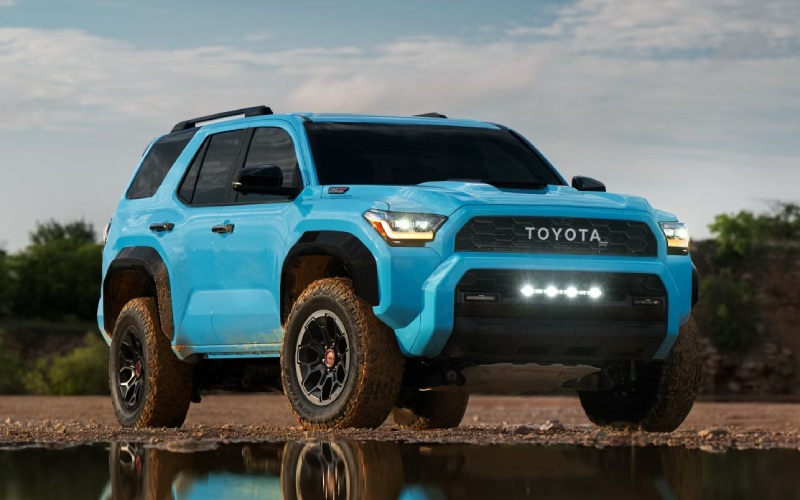
City Toyota – Does the 2026 Toyota 4Runner’s Stabilizer Disconnect Mechanism help on rocky trailheads near Whitefish, MT?
Drivers tackling rutted forest roads and rocky pullouts want to know if the 2026 Toyota 4Runner’s available Stabilizer Disconnect Mechanism is more than a buzzworthy spec. The short answer is that SDM matters because it boosts front suspension articulation at the push of a button, helping your tires maintain contact as the terrain tilts and twists beneath you. The outcome is more traction when you need it and the same on-road composure you expect when you’re back on pavement.
Let’s break down why this feature changes the drive, how it works with the 4Runner’s other trail systems, and which trims to target if your weekends include scouting remote put-ins or climbing crag approaches.
What SDM Does and Why It Matters
The front stabilizer bar reduces body roll on paved roads, keeping handling flatter and more controlled. Off-road, that same bar can limit how much each front wheel can move up or down relative to the body—what enthusiasts call articulation. By electronically disconnecting the bar, SDM allows the suspension to flex more. With greater flex, each tire stays in contact with uneven ground more easily, improving grip and stability over obstacles like offset ruts, embedded rocks, and shelfy ledges.
When you’re done with the rough stuff, the system reconnects for familiar, composed cornering. It’s a best-of-both-worlds setup: articulation when you want it, flat handling the rest of the time.
How SDM Complements Other Trail Systems
Think of SDM as a mechanical advantage that pairs with the 4Runner’s smart traction tools. Multi-Terrain Select (MTS) tunes throttle and traction control behavior for surfaces like Mud, Sand, or Rock. Crawl Control (CRAWL) manages low-speed throttle and braking to help you focus on steering through technical sections. The available Multi-Terrain Monitor (MTM) shows selectable camera views—front, side, or rear—so you can place tires precisely. Add the available i-FORCE MAX hybrid’s torque-rich output—up to 326 horsepower and 465 lb.-ft. of torque—and you have smooth, predictable control when the trail demands finesse.
On select grades, suspension hardware further refines how all this comes together. TRD Off-Road models can feature Bilstein® monotube shocks with remote reservoirs, while TRD Pro steps up to FOX® 2.5-in. Internal Bypass QS3 shocks and 33-in. all-terrain tires. Trailhunter brings Old Man Emu 2.5-in. forged shocks with rear piggyback-style remote reservoirs and overlanding-focused hardware. Each path supports SDM’s benefits in different ways.
Where You’ll Feel SDM Working
Picture a series of alternating holes or rocks—your left front drops in while your right front climbs. Without extra articulation, one tire can unload and spin. With SDM, the wheel travel increases, keeping traction more consistent. You’ll also notice it on angled approaches, where getting a front tire up and over a ledge is smoother and requires less momentum.
Around trailheads near Whitefish, MT, this can mean more composed progress up a rooty service road, less rocking over washouts, and a calmer cabin as the chassis absorbs the offset terrain. The benefit isn’t just speed—it’s control, which reduces the chance of scraping underbody components or spinning a tire at the wrong moment.
Which Trims to Look At
If SDM is on your must-have list, look at off-road-focused grades where it’s available. Pair it with Part-Time or Full-Time 4WD based on your preference, and consider tires that match your surfaces. For frequent rocky routes, a setup with robust shocks and 33-in. all-terrain tires will complement SDM’s extra flex. If your typical dirt roads are milder, you might prioritize comfort features and keep SDM in your back pocket for the occasional challenge.
Don’t overlook complementary utility: the signature power rear window for quick cargo access, tumble fold rear seats for bulky gear, and the available onboard air compressor in the cargo area for tire pressure management after airing down.
Test-Driving SDM the Smart Way
On a test drive, find a controlled environment with offset bumps or a mild articulation ramp. Engage 4WD as appropriate, select the right MTS mode, and activate SDM. Move slowly and feel how the front wheels step up and down with steadier contact. Then drive the same section with SDM off to notice the difference. Back on pavement, switch SDM off and feel the flat, secure handling return.
As a team serving Bozeman, Whitefish, and Great Falls, we encourage drivers to focus on realistic scenarios—tight switchbacks, washouts, and uneven trailhead approaches—rather than showy obstacles. The goal is control, not theatrics.
Frequently Asked Questions:
Is SDM helpful if I only tackle mild dirt roads?
Yes, though its most dramatic benefits appear on uneven surfaces. Even on mild roads, SDM can smooth out offset ruts or culverts, letting you maintain a steady pace with less cabin head toss.
Do I need 33-in. tires to benefit from SDM?
No. Larger, more aggressive tires can enhance traction and clearance, but SDM improves articulation regardless of tire size. Choose your tire based on the surfaces you encounter most frequently.
How does SDM interact with Crawl Control (CRAWL)?
Think of SDM as increasing mechanical grip, while CRAWL fine-tunes throttle and braking at very low speeds. Together, they help you maintain momentum and steer precisely over obstacles without heavy inputs.
Will SDM make on-road handling feel loose?
No. When deactivated, the stabilizer bar is connected, so on-road handling remains flat and controlled. The system is designed to give you articulation off-road and the composed feel you want back on pavement.
In short, the available Stabilizer Disconnect Mechanism is not just a spec-sheet highlight—it’s a practical tool that gives you more usable grip and calmer progress on uneven ground. Pair it with the right 4WD system, traction settings, and tires, and the 4Runner becomes an even more confident partner for trailheads and backroads alike. If you’d like a guided demo that mirrors your routes, our product specialists at City Toyota can walk you through SDM and the rest of the 4Runner’s trail tech and help you decide which configuration best matches your plans.
Request more 2026 Toyota 4Runner information
Connect with us


