


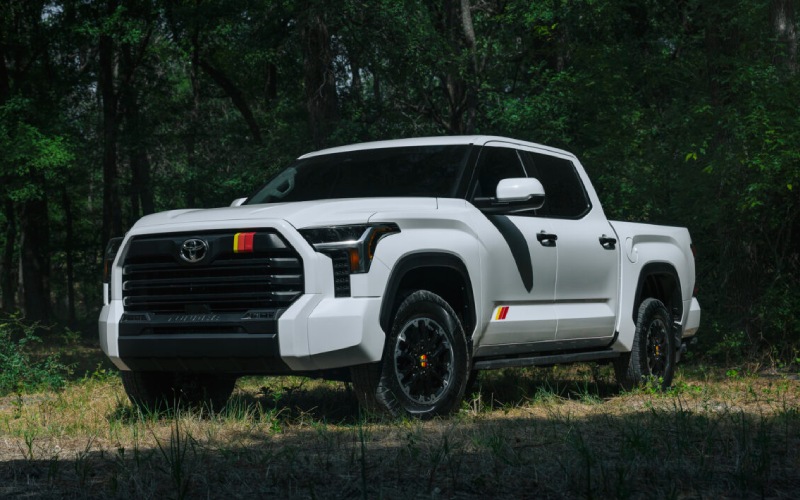
City Toyota – How the 2026 Toyota Tundra’s Multi-Link Rear Suspension Smooths Rough Roads around Fort Benton, MT
Gravel washboards, cattle-guard jolts, and frost-heaved pavement can make daily drives feel like a trail run. The 2026 Toyota Tundra addresses those Montana realities with a multi-link rear suspension that trades traditional leaf springs for coil springs and a carefully engineered linkage. The result is a different kind of truck composure—one that absorbs chatter, keeps the rear planted under load, and maintains confident tracking as speeds rise on open stretches. Whether you are hauling fencing supplies or towing a camper for a quiet weekend near the river, the Tundra’s suspension setup is designed to carry weight while staying calm and predictable.
The advantages start with better articulation and more consistent tire contact, which translates into a smoother ride across broken surfaces and improved stability when towing. Pair that with the available i-FORCE MAX hybrid system—delivering 437 hp and 583 lb.-ft. of torque—and the truck surges forward with authority, yet does not lose its composure as the rear suspension controls squat and rebound. Add in available technology like the Panoramic View Monitor for 360-degree awareness and Trailer Backup Guide with Straight Path Assist to make reversing with a trailer more intuitive, and you have a truck that reduces both physical and mental fatigue on long days. For drivers who balance weekday work and weekend exploration, that calm confidence is a real advantage.
- Ride comfort under load: Coil springs help manage squat and keep the rear stable when the bed is full or when tongue weight is substantial.
- Improved tracking: Multi-link geometry helps the Tundra stay planted on washboard gravel, reducing hop and drift.
- Predictable towing dynamics: Controlled rebound supports smoother trailer behavior and a steadier steering feel.
- All-surface versatility: From county roads to mountain switchbacks, the rear end maintains grip as conditions change.
Off-roaders benefit, too. When the trail gets rutted, articulation helps keep tires engaged, and the Tundra’s available TRD packages enhance that foundation with tuned shocks and all-terrain rubber. If your routine includes corrugated access roads to a trailhead or ranch gate, you will notice how the back end stays composed over repetitive bumps. That predictability builds trust—particularly when combined with driver-selectable modes that fine-tune power delivery for terrain or towing duties. Inside, the 12.3-in. digital gauge cluster can surface off-road and towing information, while the available 14-in. touchscreen gives you camera views and navigation on a single expansive display.
Drivers around Fort Benton who split time between open highways and gravel lanes often ask whether the Tundra’s suspension helps on long hauls with a family and gear. The answer is yes—because stability and comfort go together. By keeping the rear axle in check, the truck reduces fore-aft motion that can make passengers uneasy and helps maintain consistent control inputs from the driver. Combine that with advanced driver assistance through Toyota Safety Sense™ 2.5, and you get layered support when wind gusts, passing traffic, or surprise washouts test your poise.
For shoppers comparing setups, consider how you pack and pull. If you frequently carry awkward cargo, the aluminum-reinforced composite bed stands up to sliding loads while the multi-link suspension manages the weight shift. When towing, Trailer Backup Guide with Straight Path Assist simplifies alignment and backing maneuvers after a long day. And for those who want a bolder stance and even more trail readiness, TRD Off-Road and TRD Pro configurations sharpen the Tundra’s reflexes without losing that baseline stability that makes highway miles easy. When you are ready to evaluate cab and bed combinations, as well as accessory options that complement the suspension’s strengths, City Toyota offers guidance and build insights—serving Helena, Lewistown, and Fort Benton with product knowledge that speaks to real-world Montana driving.
Frequently Asked Questions:
Does the Tundra’s multi-link rear suspension reduce trailer sway?
It supports steadier towing by improving rear-axle control. While it is not a sway-control device, the design helps trailers track more consistently, and pairing it with a properly adjusted Integrated Trailer Brake Controller further enhances stability.
Will coil springs sag over time with heavy use?
Springs are engineered for durability within the truck’s rated capacities. Proper loading, regular maintenance, and observing tongue-weight guidelines help preserve ride height and performance over the long term.
Is the multi-link setup helpful off-road or mainly for comfort?
Both. It improves ride comfort on rough pavement and washboard roads and also enhances articulation and control off-road, especially when combined with TRD shock tuning and all-terrain tires.
How does this suspension work with the i-FORCE MAX hybrid powertrain?
The quick torque delivery of the hybrid pairs well with the suspension’s control, helping the truck launch smoothly with a trailer and remain settled as speeds rise or road surfaces change.
Request more 2026 Toyota Tundra information
Connect with us


